
 | Islam | |

A Path of Devotion, Discipline, Compassion, and Surrender to the Divine
Islam is a monotheistic spiritual tradition centered on devotion to one God (Allah), compassionate living, and following a path of spiritual discipline, remembrance, and inner peace. It emphasizes mercy, community, ethical living, and aligning the heart with divine guidance.
This path is ideal for those drawn to devotion, structure, sacred text, daily spiritual rhythm, and contemplative surrender.
☪️1. What This Path Is☪️
Islam is practiced by over a billion people worldwide and includes a wide range of expressions, such as:
- Sunni Islam
- Shia Islam
- Sufism (Mystical Islam)
- Progressive/Modern Islam
- Cultural/Traditional Islamic practices
Across these branches, core themes include:
- Devotion to one God (Allah)
- Compassion and justice
- Daily prayer and remembrance
- Ethical living
- Discipline and self-reflection
- Community and charity
- Finding peace through surrender to the Divine
Islam invites seekers into a rhythm of daily mindfulness, gratitude, and spiritual discipline.
📖2. Core Beliefs📖
Major Islamic teachings include:
- Tawhid – the oneness of God
- Prophethood – guidance through prophets including Adam, Noah, Abraham, Moses, Jesus, and Muhammad (peace be upon them)
- The Qur’an – the final revelation and spiritual guide
- Angels – divine messengers
- Day of Judgment – accountability and resurrection
- Divine Decree (Qadr) – trust in God’s wisdom
Islam centers not only on belief but on practice, which helps shape character, compassion, and spiritual awareness.
📜3. Sacred Texts & Sources📜
Primary sources include:
- The Qur’an – scripture, poetry, guidance, reflection
- Hadith – sayings and teachings of Muhammad
- Sunnah – the Prophet’s example and way of living
Secondary sources include:
- Classical scholarship
- Sufi poetry and writings
- Modern commentaries
- Cultural practices specific to each region
Spiritual seekers often turn to the Qur’an for meditation, grounding, and emotional guidance.
🧙♀️4. Deities, Guides & Archetypes🧙♀️
Important spiritual figures include:
- Allah – the Compassionate, the Merciful
- Prophet Muhammad (peace be upon him) – the final messenger, model of compassion and humility
- Prophets of earlier traditions – Abraham, Moses, Jesus, Joseph, and others
- Angels – including Jibril (Gabriel), the bringer of revelation
- Sufi saints and teachers – Rumi, Al-Ghazali, Rabia al-Adawiyya
Each figure represents virtues such as patience, surrender, love, trust, and spiritual wisdom.
🌟5. Symbols & Their Meanings🌟
Common symbols include:
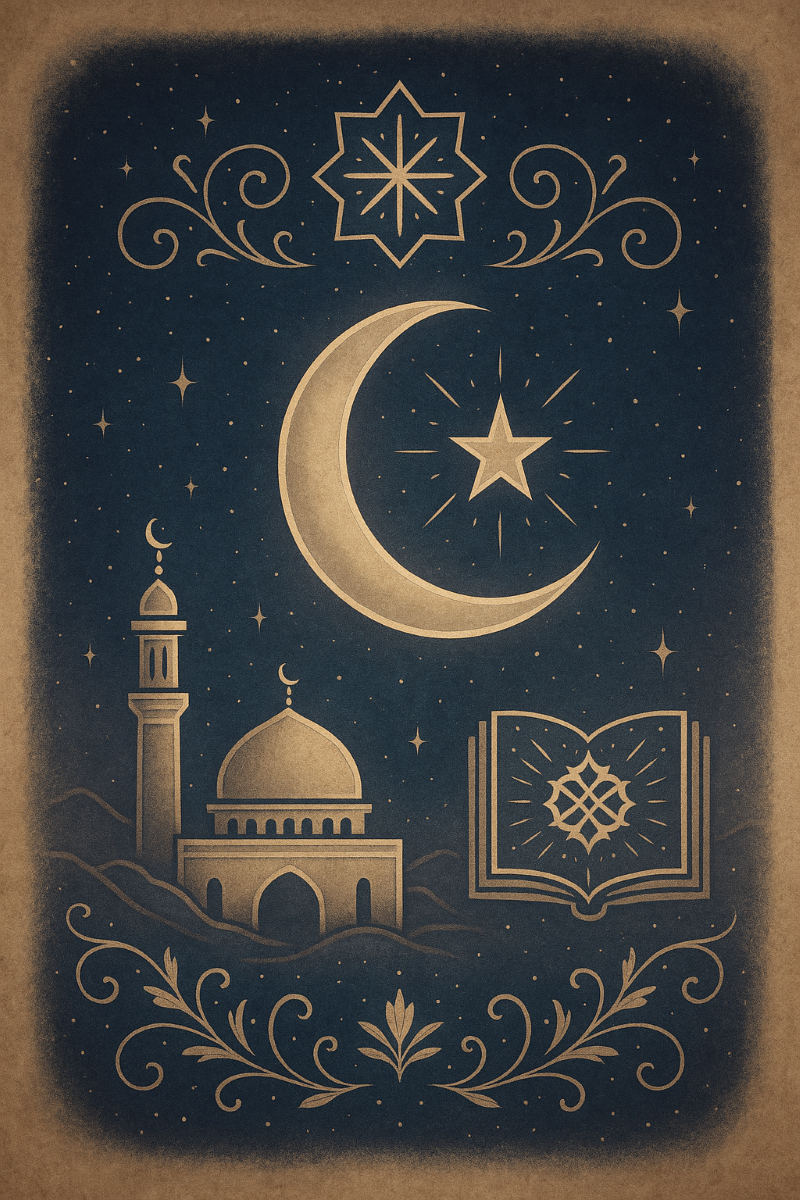
- Crescent Moon & Star – cycles, divine guidance
- Calligraphy – beauty, devotion, expression of sacred words
- Prayer Beads (Misbahah/Tasbih) – remembrance and grounding
- The Color Green – symbolic of paradise and renewal
- Kaaba – spiritual center, unity of believers
- The Name “Allah” – divine presence and remembrance
Islamic art often avoids imagery of people and instead uses geometry, light, and pattern to express the divine.
🔥6. Rituals & Practices🔥
Islam’s spiritual foundation includes the Five Pillars, which create rhythm and structure:
- Shahada – declaration of faith
- Salat – five daily prayers
- Zakat – charity and generosity
- Sawm – fasting during Ramadan
- Hajj – pilgrimage to Mecca (if able)
Other practices include:
- Dhikr – remembrance through repeated sacred phrases
- Dua – personal prayer
- Qur’an meditation
- Sufi whirling or chanting (in some branches)
- Charitable acts
- Community gatherings
These practices cultivate humility, gratitude, mindfulness, compassion, and devotion.
🌿7. Bringing This Path Into Daily Life🌿
Islam can be woven into everyday life through simple actions:
- Pausing for short moments of gratitude
- Mindful prayer or reflection
- Reading a verse from the Qur’an
- Listening to recitations or nasheeds
- Practicing kindness as worship
- Repeating “Bismillah” (In the name of God) before tasks
- Letting go of stress through surrender
- Practicing humility and patience
- Journaling moments of gratitude
Islam views everyday actions – eating, cleaning, working, resting – as opportunities for spiritual mindfulness.
🌀8. Blending With Other Paths🌀
Islam can blend thoughtfully with:
- Meditation practices
- Mystical traditions
- Ethical philosophies
- Modern mindfulness
- New Age practices (in symbolic or energetic forms)
- Personal spiritual introspection
Sufism, in particular, resonates deeply with:
- symbolism
- poetry
- chanting
- energy of the heart
- divine love
Your site presents Islam in a respectful, symbolic, and accessible way appropriate for interfaith exploration.
🧭9. Begin Your Pagan Path🧭
Here are gentle starting points:
🌅For Beginners:🌅
- Read a short verse from the Qur’an
- Practice mindful breathing with “Allah” on the inhale/exhale
- Learn the meaning of Bismillah, Alhamdulillah, and Inshallah
- Explore a Sufi poem from Rumi or Hafiz
- Practice one small act of kindness intentionally
- Sit quietly and reflect on surrender and peace
📖Beginner Resources:📖
- The Qur’an (clear English translations: Abdel Haleem or Mustafa Khattab)
- The Essential Rumi
- The Alchemy of Happiness — Al-Ghazali
- Purification of the Heart — Hamza Yusuf
- 40 Rabbana Prayers
🔍Explore Subtopics (coming soon):🔍
- Core beliefs
- The Five Pillars
- Sufi mysticism
- Qur’an symbolism
- Angels in Islam
- Daily prayer practice
- Islamic meditation & dhikr
- Sacred names and attributes
- Ramadan traditions
- Islamic poetry and wisdom
🌿When You’re Ready…🌿
Return to the paths page
or continue to the next spiritual system:
👉 Next: Indigenous / Earth-Based Traditions →