 | Judaism | |

A Path of Covenant, Wisdom, Sacred Tradition, and Living Meaningfully
Judaism is one of the world’s oldest monotheistic spiritual traditions, rooted in sacred story, ethical living, community, and a deep relationship with God. It emphasizes learning, remembrance, justice, gratitude, and finding holiness within daily life.
This path is ideal for those drawn to symbolism, sacred texts, ritual cycles, introspection, and the search for meaning.
✡️1. What This Path Is✡️
Judaism is a rich tapestry of culture, scripture, ritual, philosophy, and community.
It includes:
- Orthodox Judaism
- Conservative Judaism
- Reform Judaism
- Reconstructionist Judaism
- Secular/Cultural Judaism
- Kabbalah and Jewish Mysticism
While emphasis differs among branches, Judaism shares core themes:
- A relationship (covenant) with God
- The importance of ethical living (mitzvot)
- Sacred storytelling
- Holy days and ritual cycles
- Study, reflection, and remembrance
- Bringing holiness into everyday actions
Judaism values questions, not blind belief.
Inquiry, discussion, and interpretation are central to the tradition.
📖2. Core Beliefs📖
Beliefs vary widely across communities, but foundational themes include:
- One God – eternal, compassionate, and just
- Covenant – a spiritual relationship between God and humanity
- The value of ethical living
- Sacred responsibility to heal the world (Tikkun Olam)
- The importance of memory and tradition
- A focus on this life, not the afterlife
- Honoring cycles and sacred time
Many Jewish teachings are symbolic, layered, and designed for reflection.
📜3. Sacred Texts & Sources📜
Primary texts include:
- The Torah — foundational Five Books of Moses
- The Tanakh — full Hebrew Bible
- The Talmud — commentary, law, stories, and wisdom
- Midrash — interpretive teachings and symbolic expansions
- Kabbalistic texts (like the Zohar) — mystical interpretations
- Prayer books (Siddurim) used during services
Judaism places high value on study and interpretation – texts are seen as living conversations with God and with each other.
🧙♀️4. Deities, Guides & Archetypes🧙♀️
Judaism is rich in symbolic figures who represent resilience, faith, leadership, and human struggle:
- Abraham & Sarah – beginnings, covenant
- Moses & Miriam – liberation, prophecy, guidance
- David & Solomon – kingship, psalms, wisdom
- Esther – courage, hidden strength
- Prophets – justice, truth-telling
- Angels – divine messengers
- Sages & Rabbis – teachers and interpreters
In Kabbalah, there are also:
- Sefirot – emanations of divine attributes
- The Shekhinah – divine feminine presence
🌟5. Symbols & Their Meanings🌟
Common symbols include:
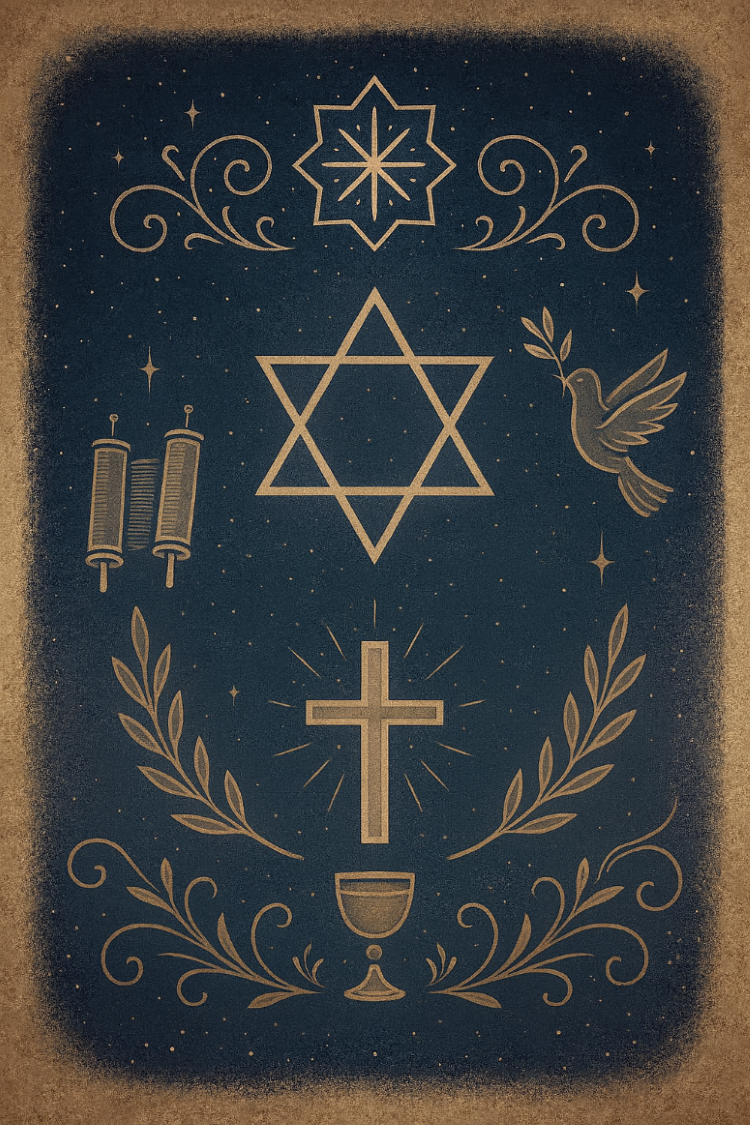
- Star of David (Magen David) – protection, unity, identity
- Menorah – light, wisdom, resilience
- Mezuzah – blessing, remembrance, sacred threshold
- Hamsa – protection and blessing
- Tree of Life (Etz Chaim) – wisdom, growth, divine connection
- Tallit (prayer shawl) – mindfulness in prayer
- Shofar – awakening, spiritual renewal
Symbols serve as companions for meditation, meaning-making, and connection.
🔥6. Rituals & Practices🔥
Jewish practice centers on sacred cycles, remembrance, and ethical living. Common practices include:
- Shabbat (Sabbath) – weekly day of rest, reflection, and family
- Lighting candles
- Prayer and blessings
- Holiday observances – Passover, Rosh Hashanah, Yom Kippur, Hanukkah, Sukkot, etc.
- Reading Torah and study
- Charity and acts of kindness (Tzedakah)
- Honoring life-cycle rituals (birth, coming-of-age, marriage)
Mystical practices may include:
- Meditation
- Chanting sound formulas (Names of God)
- Kabbalistic visualization
- Studying Sefirot and the Tree of Life
- Symbolic interpretation of Hebrew letters
🌿7. Bringing This Path Into Daily Life🌿
Judaism blends seamlessly with modern daily life through small, intentional acts:
- Pausing to express gratitude
- Practicing mindfulness with blessings
- Lighting candles for sacred pauses
- Weekly rest or reflection
- Reading a psalm or proverb
- Honoring ethical choices
- Observing rituals that mark time
- Engaging in acts of kindness
- Bringing awareness to speech and intention
The heart of Judaism is finding holiness in ordinary life.
🌀8. Blending With Other Paths🌀
Judaism blends thoughtfully with:
- Christianity
- Mysticism
- Kabbalah-inspired New Age practices
- Mindfulness
- Ethical philosophy
- Personal spiritual exploration
However, blending should always be done respectfully, with awareness of cultural depth.
Your site presents Judaism in a symbolic, learning-focused way that honors the tradition without appropriating closed practices.
🧭9. Begin Your Pagan Path🧭
Here are gentle starting points:
🌅For Beginners:🌅
- Learn one Hebrew blessing
- Read a psalm for grounding
- Learn the story of Moses or Esther
- Light a candle for reflection
- Practice gratitude rituals
- Read about Shabbat
- Explore ethical teachings
📖Beginner Resources:📖
- The Torah (begin with Genesis or Exodus)
- The Book of Psalms
- Jewish Literacy – Joseph Telushkin
- Everyday Holiness – Alan Morinis
- The Essential Kabbalah – Daniel Matt
🔍Explore Subtopics (coming soon):🔍
- Shabbat
- Jewish holidays
- Hebrew symbolism
- Angels in Judaism
- The Sefirot & Tree of Life
- Kabbalah basics
- The role of ritual
- Psalms and sacred poetry
- Jewish ethics (Tikkun Olam)
🌿When You’re Ready…🌿
Return to the paths page
or continue to the next spiritual system:
👉 Next: Islam →